

Choosing a solar inverter for an Indian project looks simple until the first summer hits and your phone starts buzzing with “inverter tripped” calls. On paper, many options look similar, but small choices in DC/AC ratio, MPPTs, protections, and service can quietly decide whether a plant runs smoothly or keeps draining your O&M team. This guide breaks down how experienced project teams think about inverter selection when the real goal is stable generation, fewer surprises, and a healthy IRR over 20–25 years.
Why inverter choice matters in India
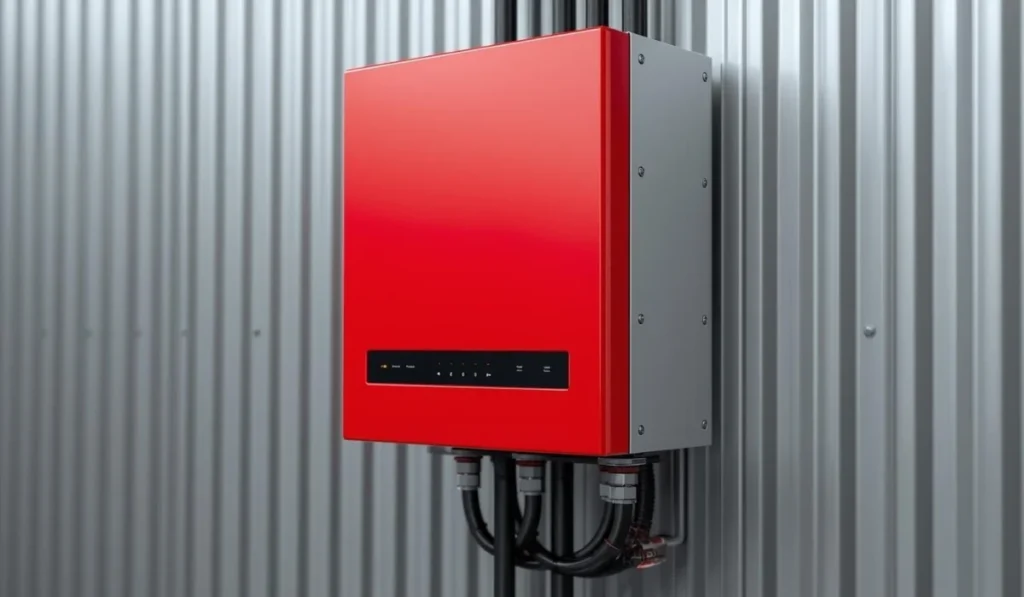
If you have commissioned plants in Indian summers, you already know that inverters do not live in catalogue conditions. They sit on hot roofs, in dusty yards, next to vibrating machinery, and on feeders that see regular voltage swings.
In that environment, even a small design or brand mistake can show up as unexplained trips, derating at the wrong time, or long waits for service. Every extra visit, every week of under‑generation, and every unresolved alarm eats into IRR and creates difficult conversations with clients and investors. A slightly better upfront choice on inverter platform often pays back through higher uptime, easier O&M, and smoother audits over the project life.
Key factors in inverter selection
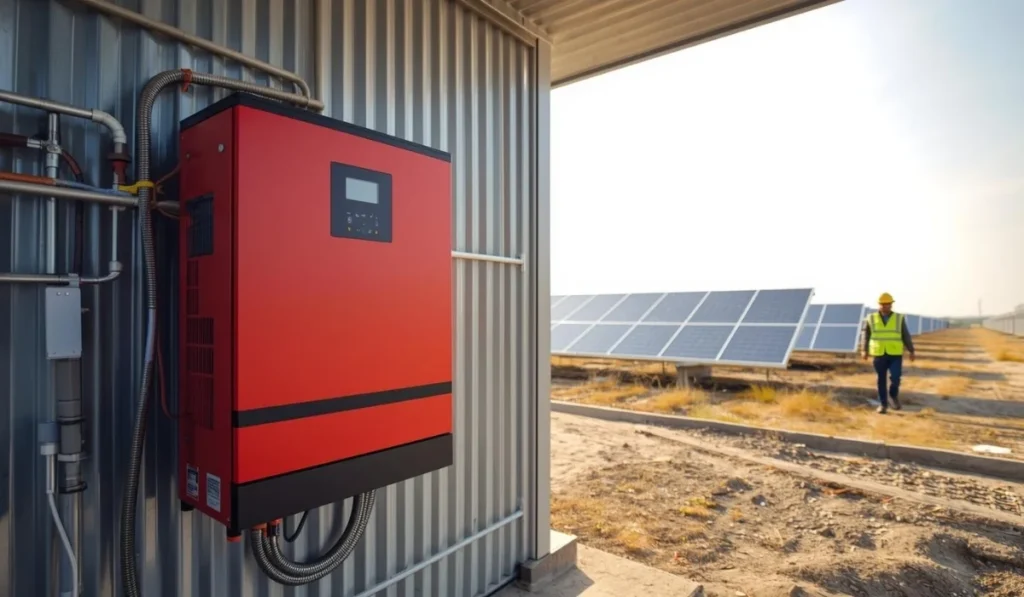
Most of us start with a simple comparison table: kW rating, efficiency, price. That is a good start, but it is rarely enough. Below are seven factors that usually separate “looks OK on paper” from “actually works on site”.
1. Efficiency and DC/AC ratio
Let us be honest, efficiency is the first spec many people check. But in projects, it is the combination of efficiency and DC/AC ratio that really drives yield. Many modern C&I and utility‑oriented inverters allow higher DC/AC oversizing, which lets you pull more energy out of the same AC nameplate.
When you compare options, do not just stop at “X% efficiency”:
- Check the maximum DC/AC ratio the inverter comfortably supports.
- Look at weighted / European efficiency, not only the peak number.
- Ask how the inverter behaves at partial load and in high ambient temperatures.
C&I inverters from established brands, including GoodWe’s commercial and industrial range, are designed to handle higher DC oversizing while maintaining good efficiency profiles for Indian conditions, which is one reason they are increasingly used in C&I and portfolio projects.
2. MPPT design and string flexibility
On a clean, rectangular ground‑mount site, almost any MPPT layout can be made to work. On real Indian rooftops and industrial sheds, MPPT architecture quickly becomes the difference between a forgiving design and a fragile one. Multiple orientations, partial shadows from structures, and uneven string lengths are normal, not exceptions.
What usually matters in practice:
- Number of MPPTs per inverter and strings per MPPT for layout flexibility.
- Maximum input current per string / MPPT, especially with newer high‑current modules.
- The string voltage window and allowed string length range, so you are not forced into awkward compromises.
In multi‑shed C&I projects, EPCs often move towards inverter families with more MPPTs and generous current limits, because that lets design teams handle complex layouts without endless site‑specific fixes. C&I‑focused string inverters from Tier‑1 brands, including GoodWe, have been shaped around exactly these use cases.
3. Protection, safety, and compliance
As project sizes grow and policies tighten, compliance and safety features are becoming non‑negotiable. A small fire event or grid compliance issue can undo years of relationship‑building with a client.
Critical points to check on each inverter family:
- Built‑in DC and AC surge protection and their types (Type II / III).
- AFCI (arc‑fault) and rapid shutdown options where relevant.
- Grid code compliance for the states and utilities you usually work with.
Many Tier‑1 inverter brands, including GoodWe, increasingly highlight protections and compliance for C&I and utility‑scale deployments in India as part of their value proposition. For EPCs, this is not just a spec‑sheet detail, it is risk management.
4. Thermal design and derating in Indian summers
A datasheet rated at 25°C does not tell the full story for Rajasthan, Maharashtra, Telangana, or Tamil Nadu in May. Inverters that derate aggressively as ambient temperatures rise can reduce generation exactly when irradiance is highest.
Design teams should pay attention to:
- The operating temperature range and any published derating curves.
- The cooling method (natural, forced, or hybrid) and how it is implemented.
- Real‑world performance references in similar climates and project types.
Brands that have supplied significant rooftop and C&I capacity across India, including GoodWe, usually have field performance data and case examples showing behaviour under high‑temperature conditions. Asking distributors for references from plants in similar climates is often more useful than another hour spent only on the datasheet.
5. Monitoring, data, and fleet management
For portfolios spread across multiple locations, a strong monitoring platform is now as important as the inverter hardware. A plant you cannot see is a plant you cannot truly manage.
Evaluate each ecosystem, not just the device:
- Portal and app capabilities: multi‑site views, alerts, performance ratios.
- API or integration options with third‑party monitoring or SCADA.
- Data granularity at string / MPPT level for diagnostics, not just total AC power.
C&I‑oriented inverter platforms increasingly come with advanced monitoring tools tailored for portfolios, which bulk buyers can leverage to reduce O&M time and improve response to underperformance. For developers, this also makes portfolio reporting to investors much simpler.
6. Service network and support in India
This is where many projects win or lose over the long term. A technically sound inverter with weak service backing can still become a liability.
Questions worth asking every potential inverter partner:
- How many service centres and authorised partners exist across your main states?
- What is the typical response time for on‑site visits and spare replacement?
- Are training, commissioning support, and design assistance available for your engineers?
Inverter brands that are actively expanding their India distribution and service network, such as GoodWe, usually publicise new partnerships and local support, which EPCs can use as a signal that they will not be left alone after COD. Working with authorised distributors further tightens the loop on spares, documentation, and escalation.
7. Bankability, warranties, and long‑term risk
For utility‑scale plants and large C&I portfolios, lenders and investors look at inverter bankability, not just kW. Warranty terms, financial stability of the manufacturer, and independent rankings all contribute to perceived risk.
When shortlisting brands, check:
- Standard and extended warranty options, and how they are actually executed in India.
- Global and India‑specific shipment volumes or rankings that show market acceptance.
- Case studies or references with recognised corporate or industrial clients.
GoodWe, for example, has been highlighted as a leading rooftop inverter supplier in India with several GW of installed capacity and collaborations on large C&I and utility projects, which helps EPCs and financiers feel more comfortable with long‑term risk.
How to choose the right inverter
With these factors in mind, a practical selection flow usually works better than ad‑hoc model‑by‑model decisions. A simple approach many teams follow:
- Define the portfolio type clearly
- Rooftop C&I, ground‑mount C&I, utility‑scale, or mixed.
- Typical project size ranges and geographies.
- Shortlist 2–3 inverter families per segment
- Focus on C&I / utility‑oriented series from bankable brands that meet your DC/AC, MPPT, and protection needs.
- Include at least one option that supports higher DC oversizing and multiple MPPTs for complex roofs.
- Compare service and ecosystem, not just specs
- Map service presence to your states and project pipeline.
- Look at monitoring, training, and commissioning support along with hardware.
- Standardise wherever it makes sense
- For repeatability, many EPCs standardise on one or two inverter families (for example, a GoodWe C&I series) across similar project types.
- This simplifies design, training, spares, monitoring, and negotiations with suppliers.
Once this framework is in place, every new project is just an application of the same logic, not a fresh fight between lowest price and last‑minute changes.
Common mistakes EPCs still make
Even experienced teams fall into some predictable traps. A few that keep repeating:
- Treating inverters as pure commodities, where the lowest unit price wins without a full‑lifecycle comparison.
- Ignoring derating and local climate, assuming nameplate behaviour across all sites and seasons.
- Underestimating MPPT and string complexity on irregular roofs, which leads to mismatch losses and frequent trips.
- Separating design and procurement too much, so technical requirements get diluted during negotiations.
- Looping in service teams too late, which leads to confusion over who owns commissioning and early‑life issues.
Avoiding just these mistakes often does more for project ROI than squeezing another small discount on hardware.
When to consider GoodWe inverters and Watplus
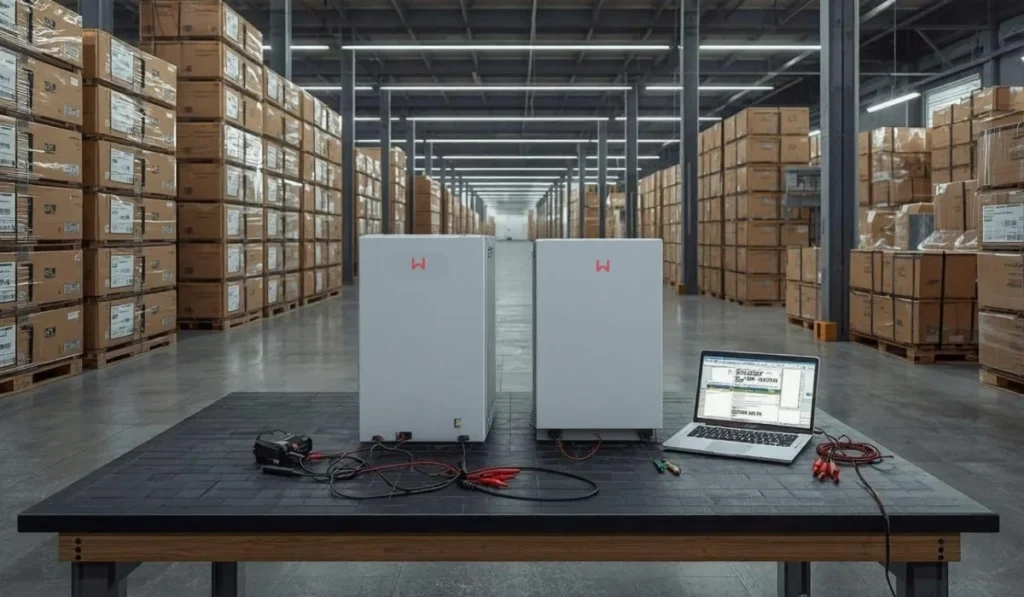
The principles in this guide are brand‑neutral, but in real projects, you eventually have to choose a platform. Many Indian EPCs and developers now include GoodWe by default when building their shortlists for C&I and portfolio projects.
GoodWe has built a strong presence in India’s rooftop and C&I segments, with dedicated product lines for commercial, industrial, and utility‑scale use and several GW already installed in the country. The brand is also expanding its distribution and service network, onboarding authorised partners like Watplus to support EPCs and bulk buyers with design support, logistics, and after‑sales coverage across key states.
If you are exploring GoodWe for upcoming C&I or MW‑scale projects and want to sanity‑check your inverter options, it helps to speak with a team that works on GoodWe every day for EPCs and developers across India. Watplus plays that role as an authorised distribution partner, helping project teams match the right GoodWe inverter families to real‑world sites instead of treating it as just another line item in the BOQ.
FAQs on solar inverters in India
Which solar inverter is best in India for EPC and C&I projects?
There is no single “best” inverter for every project, but C&I‑oriented string inverters from established brands with strong India presence, including GoodWe, are widely used because they balance efficiency, features, and service support. The right choice depends on project size, layout, grid conditions, and the level of service your projects need.
How should EPCs choose between central and string inverters?
String inverters are increasingly preferred for many rooftop and small‑to‑medium ground‑mount C&I projects because they offer more MPPTs, better partial shading handling, and easier maintenance, while central inverters may still make sense for some very large, uniform utility‑scale plants. The decision should be based on layout complexity, redundancy needs, and your O&M capabilities.
Does a higher‑priced inverter always give better ROI?
Not always, but very low‑priced options often hide higher long‑term costs in the form of more downtime, weaker service, or shorter warranties. A realistic comparison should include lifetime energy yield, maintenance effort, and service risk, not only the initial capex.
How can EPCs reduce inverter‑related risk on new projects?
Standardise on a small set of proven inverter families, work closely with authorised distributors for design and commissioning, and make sure your contracts clearly define service response times and escalation paths. This reduces both technical and commercial uncertainty for you and your clients.
In the end, the “best” inverter for your project is the one that keeps your client off the phone and your plant quietly generating for years. If you are considering GoodWe for an upcoming C&I or MW‑scale project and want a second opinion on which series makes sense, Watplus can help you think it through as GoodWe’s authorised distribution partner in India. You can reach out whenever you are shortlisting inverters for a live BOQ, or you are just a call away from the Watplus team on +91 70281 43544 if a quick conversation feels easier.